Roundup Report: Owyhee Complex 2026

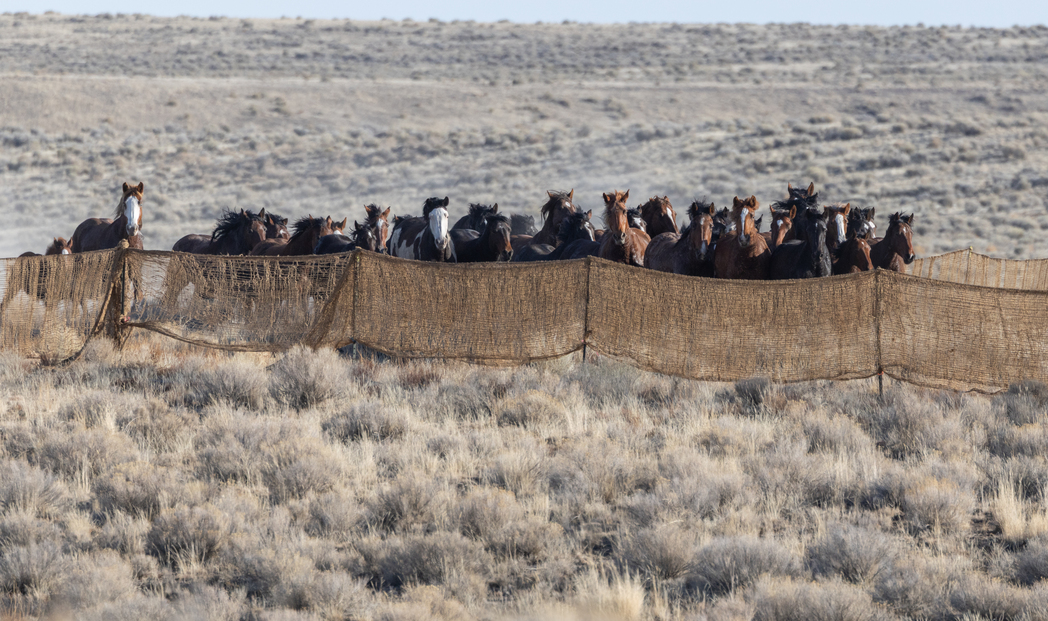

An emergency helicopter roundup is slated to begin on January 26, targeting wild horses in Nevada's Snowstorm Mountain and Little Humboldt areas. The Bureau of Land Management (BLM) plans to remove approximately 182 horses of the 272 who live there, removing the majority of the population.
The area consists of 119,543 acres of BLM land and 14,718 additional acres of public and private land, yet the agency's unscientific Appropriate Management Level claims that just 138-220 wild horses can inhabit the area.
This roundup will take place near the Jakes Fire burn area. The BLM claims the horses are in poor body condition due to the wildfire, which may have left the horses without adequate forage.
When agencies rely on emergency authority, transparency can disappear overnight—making independent monitoring more critical than ever. Our roundup observers will be in the field to document the operation, and we will keep you informed on the situation.
AWHC is on the ground documenting this roundup. Read on for daily updates from the range
January 30, 2026
We met BLM personnel at 6:30 AM and traveled to the same trap site and observation point used on Thursday. We arrived at the observation point shortly before 7:30 AM, positioned approximately 3/4 mile from the trap. Conditions were partly cloudy with temperatures in the high 20s, warming as the sun rose.
Upon arrival, we were informed the helicopter was already airborne searching for horses. When asked about temporary holding, we learned there is no temp holding facility for this operation, horses are transported directly to the Winnemucca Off-Range Corral facility.
The pilot initially could not locate horses and landed at the trap to pick up an additional spotter.
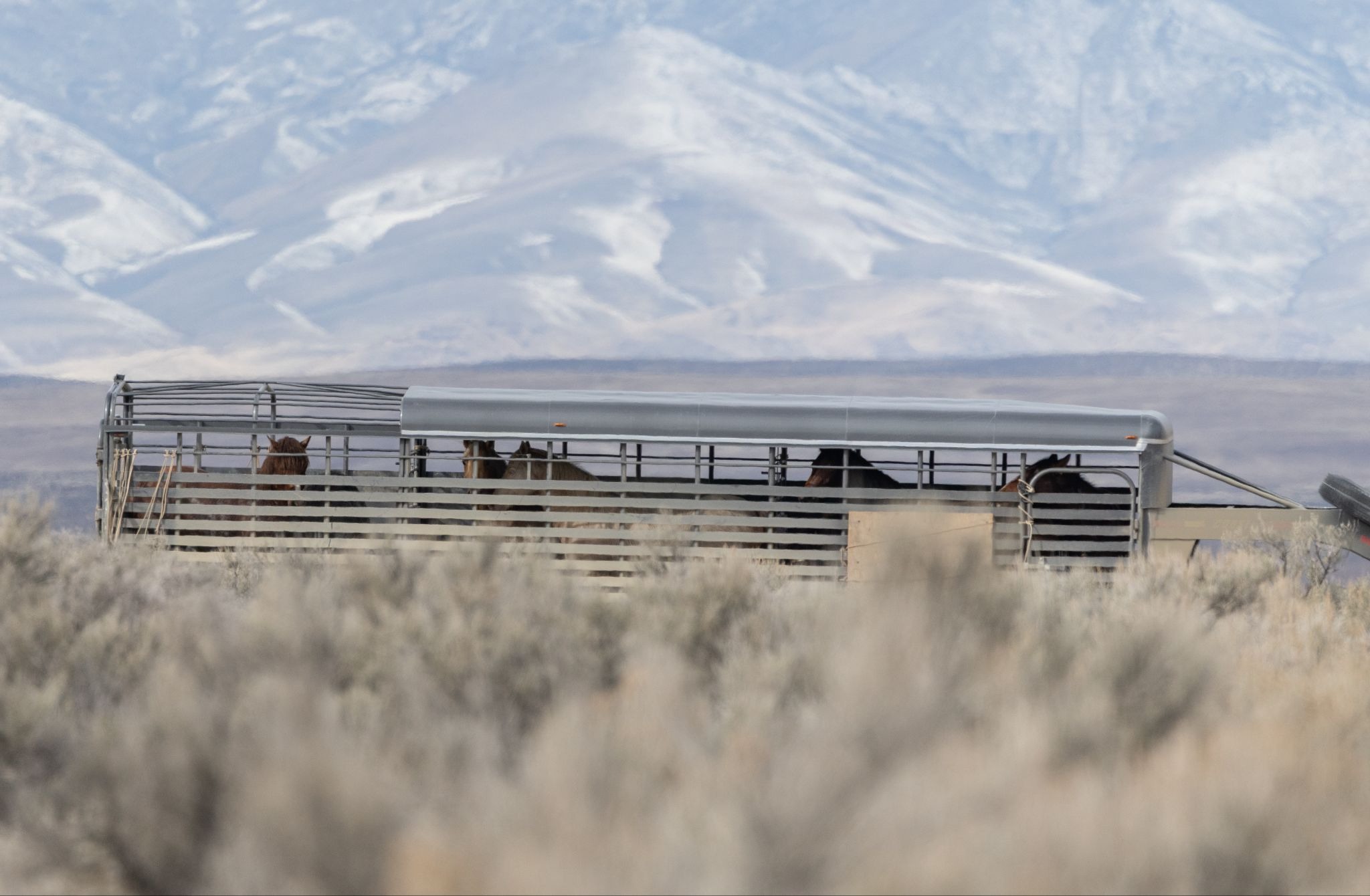
Run 1 – 9:05 AM: Approximately 18 horses entered the trap. Due to confusion with the Judas horse during the previous day's operation, BLM used two Judas horses for this run. Steam was visible rising from the horses' bodies in the cold morning air as they stood in the trap pen. Horses were loaded onto two trailers and departed for the Winnemucca facility at 9:23 AM.
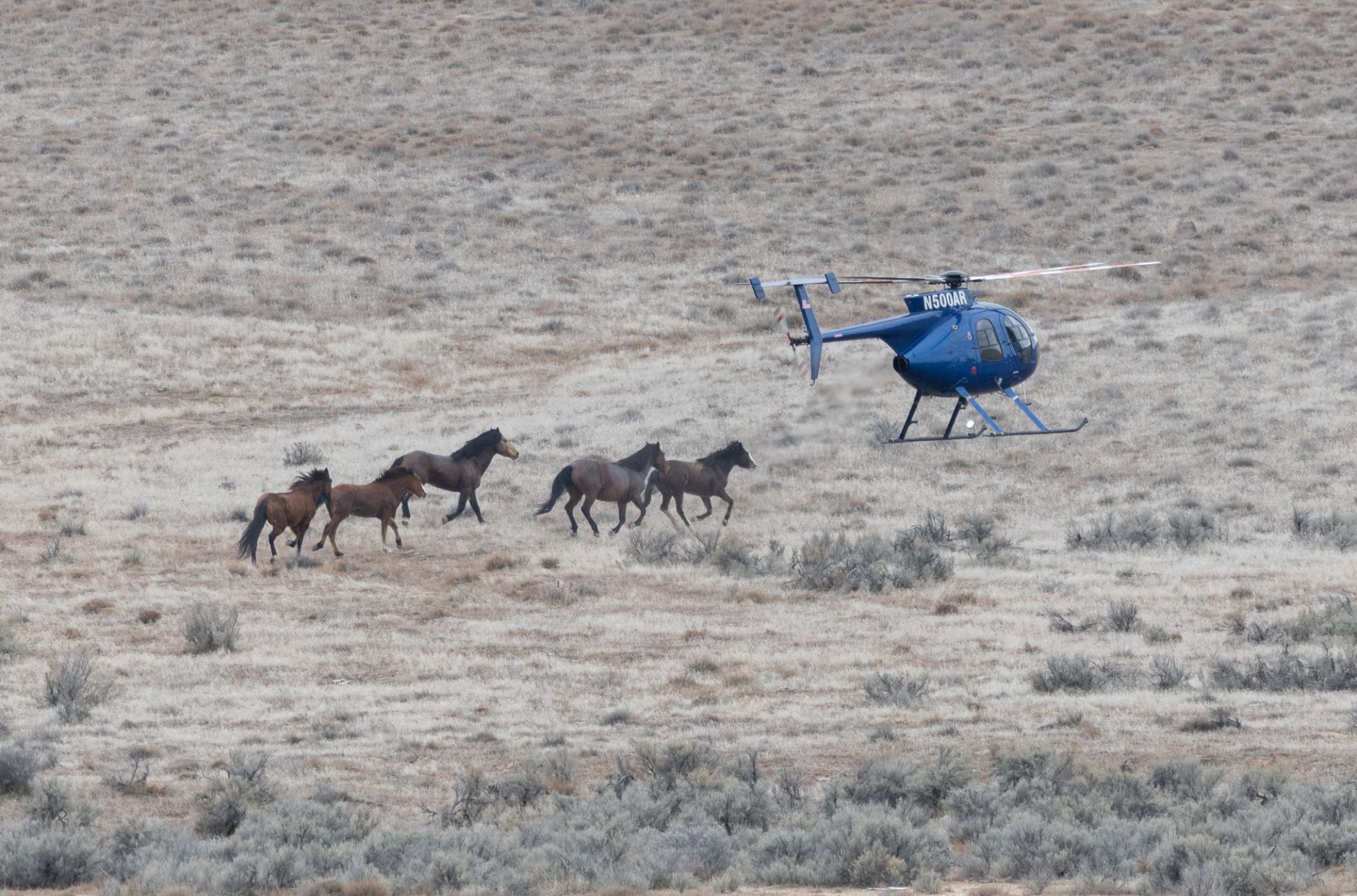
Run 2 – 10:35 AM: Five horses entered the trap.
Run 3 – 10:39 AM: Four horses entered the trap, reaching the targeted removal number.
The Jakes Fire Emergency roundup concluded at 10:40 AM, having reached the BLM's removal target.
January 29, 2026
We met the BLM at 6:30 AM at a gas station 22 miles north of Winnemucca. After traveling another 41 miles, we arrived at the observation point about 7:30 AM. Temperature began in the upper 20s and warmed up as the day went on. It was partly cloudy and breezy.
Limited Visibility
We were situated on a hillside about three-quarters of a mile from the trap. We had a hill to our left so we couldn't see that direction. We could see the entire wings but only the very entrance of the trap. We couldn't see the end of the trap or the trailers/loading.
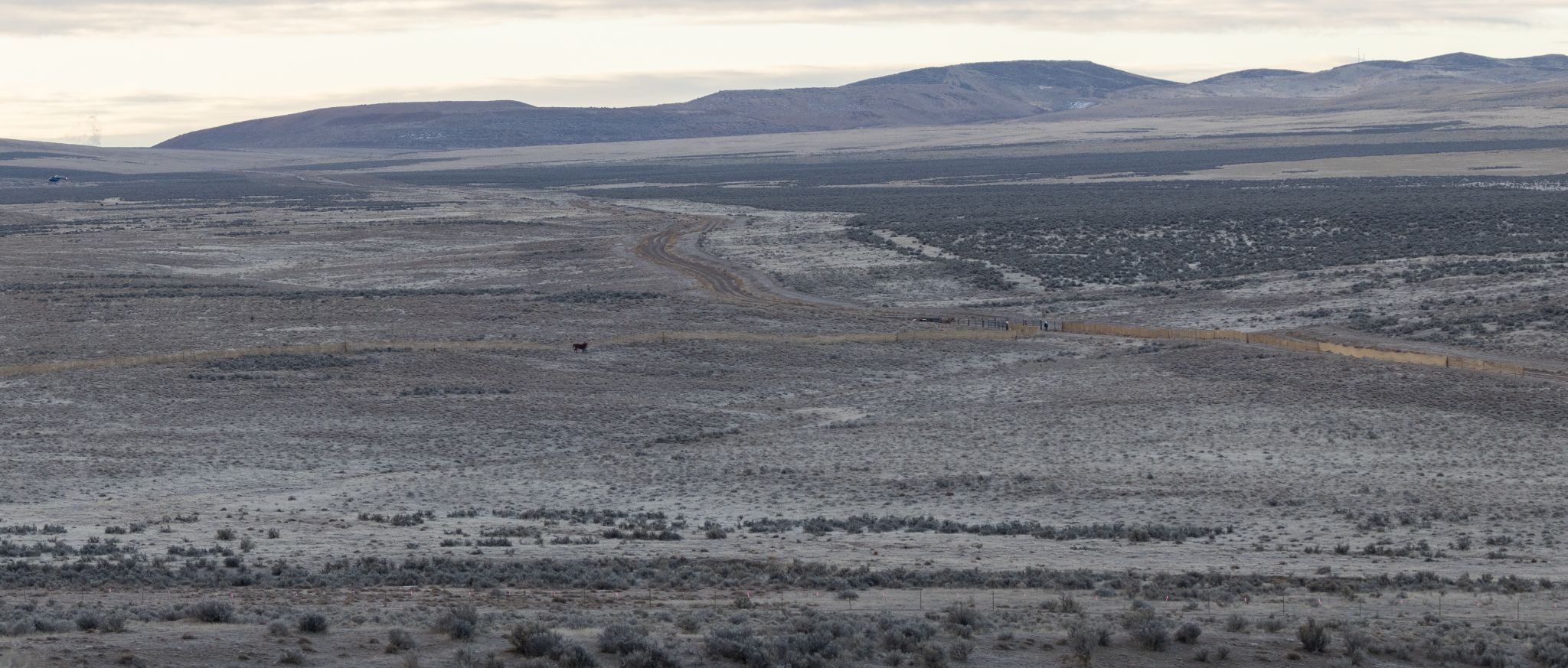
I was one of three observers.
The Runs
Run 1 of 8 horses came in shortly after 8 AM. One more straggler came in right after. You could see its breath from the cold air as it entered the trap. They were loaded and the trailer left at 9:09 AM.
At 10:42 AM we got word the helicopter had horses and was 2 miles out.
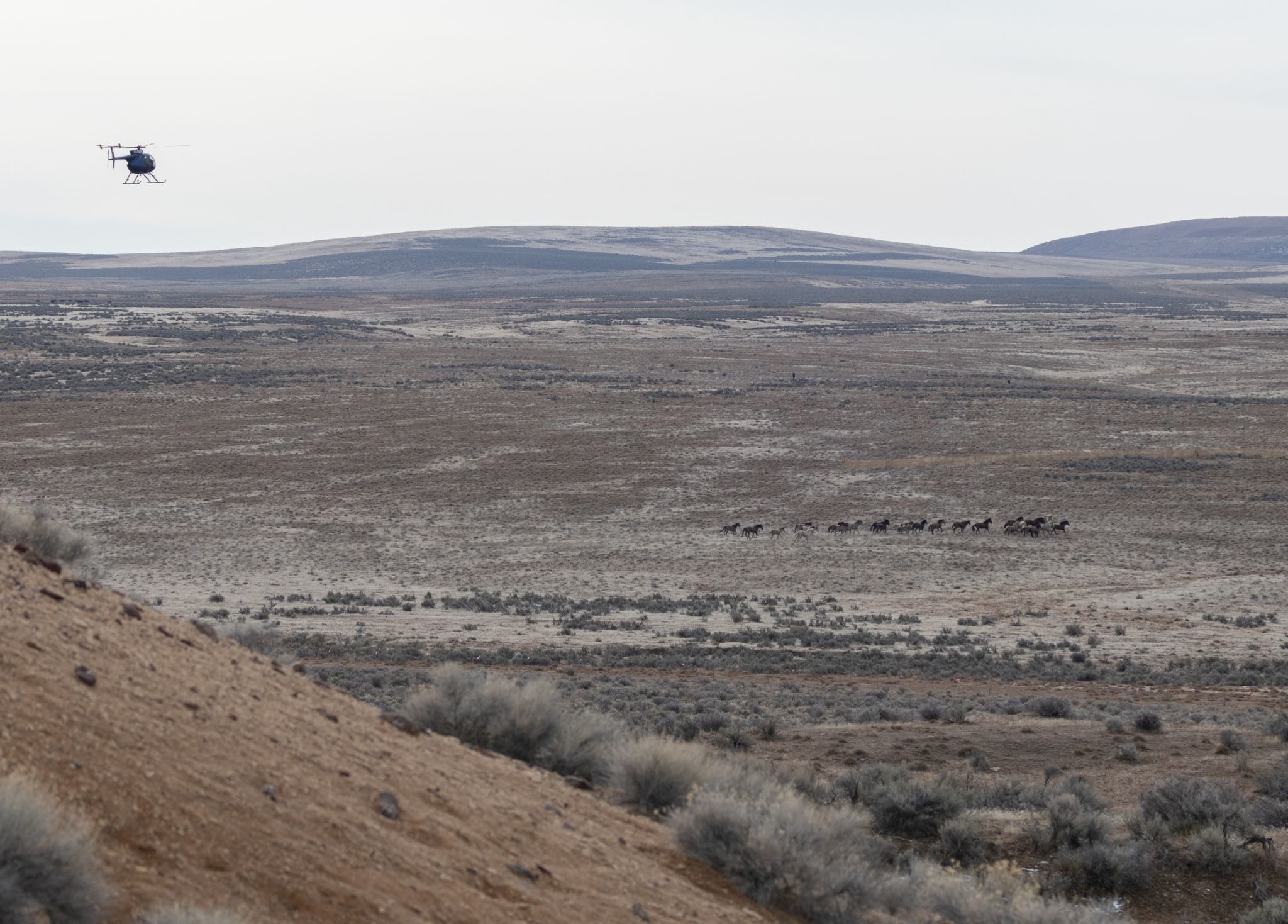
At 10:54 AM, run 2 of about 30 came into the trap. It was broken into 2 groups with the first being the largest. As they approached the entrance of the trap, the pilot dropped back and brought in the rest. The Judas horse did not lead the first group all the way in the trap so they started to turn around, but were intercepted again by the pilot bringing in the smaller portion of the group. They all entered together.
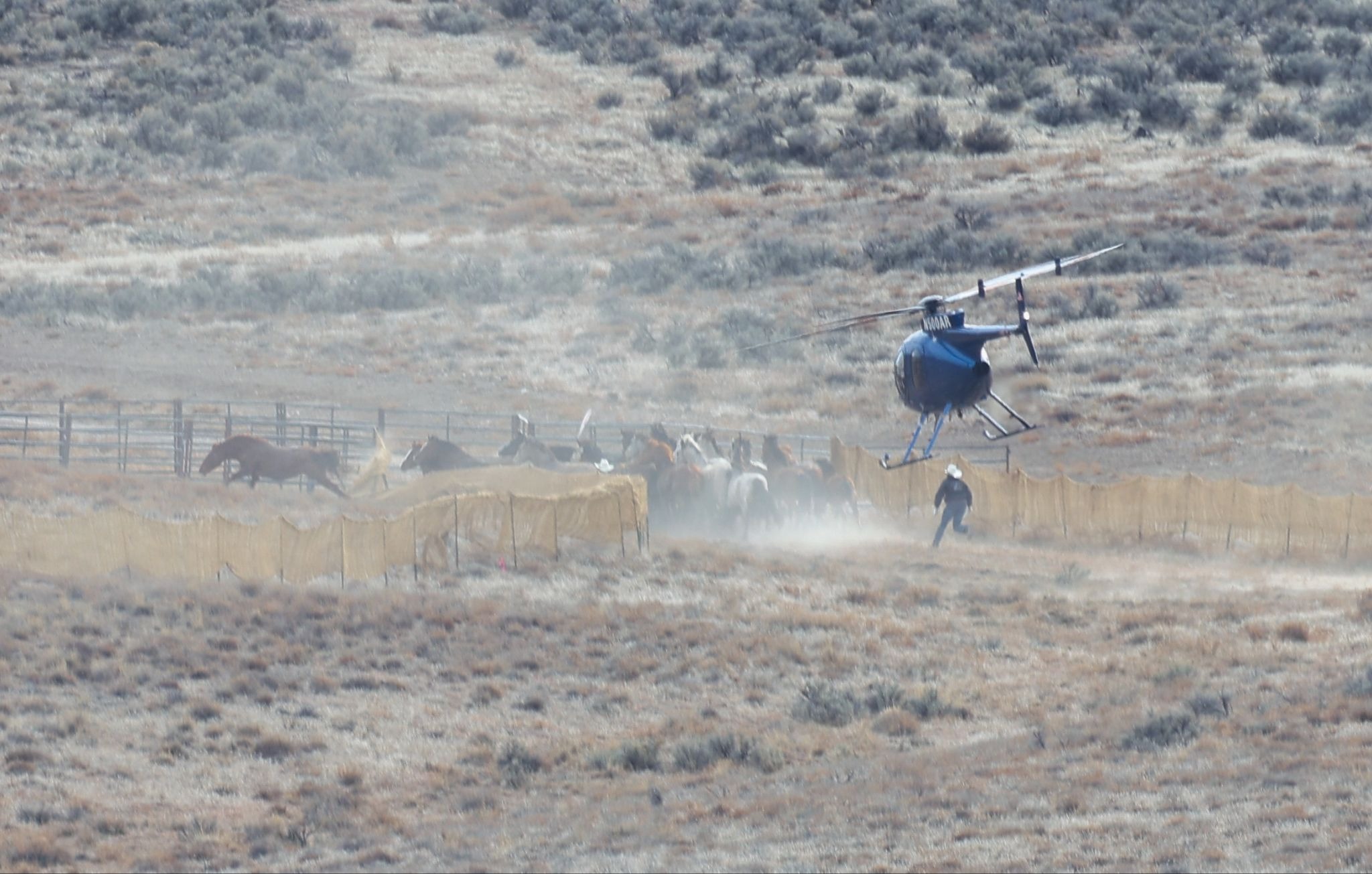
At 11:13 AM run 3 of just 2 horses came in followed by 2 wranglers. These horses were moving slower and it appeared as though the dark horse had a slight limp. Perhaps they were older horses. I could see the wranglers preparing their ropes in case they needed to rope them but they didn't.
What We Could See
Loading of the second and third runs was taking place but I couldn't see much. However, it looked like chaos. A couple horses jumped up on the side panels looking to escape.
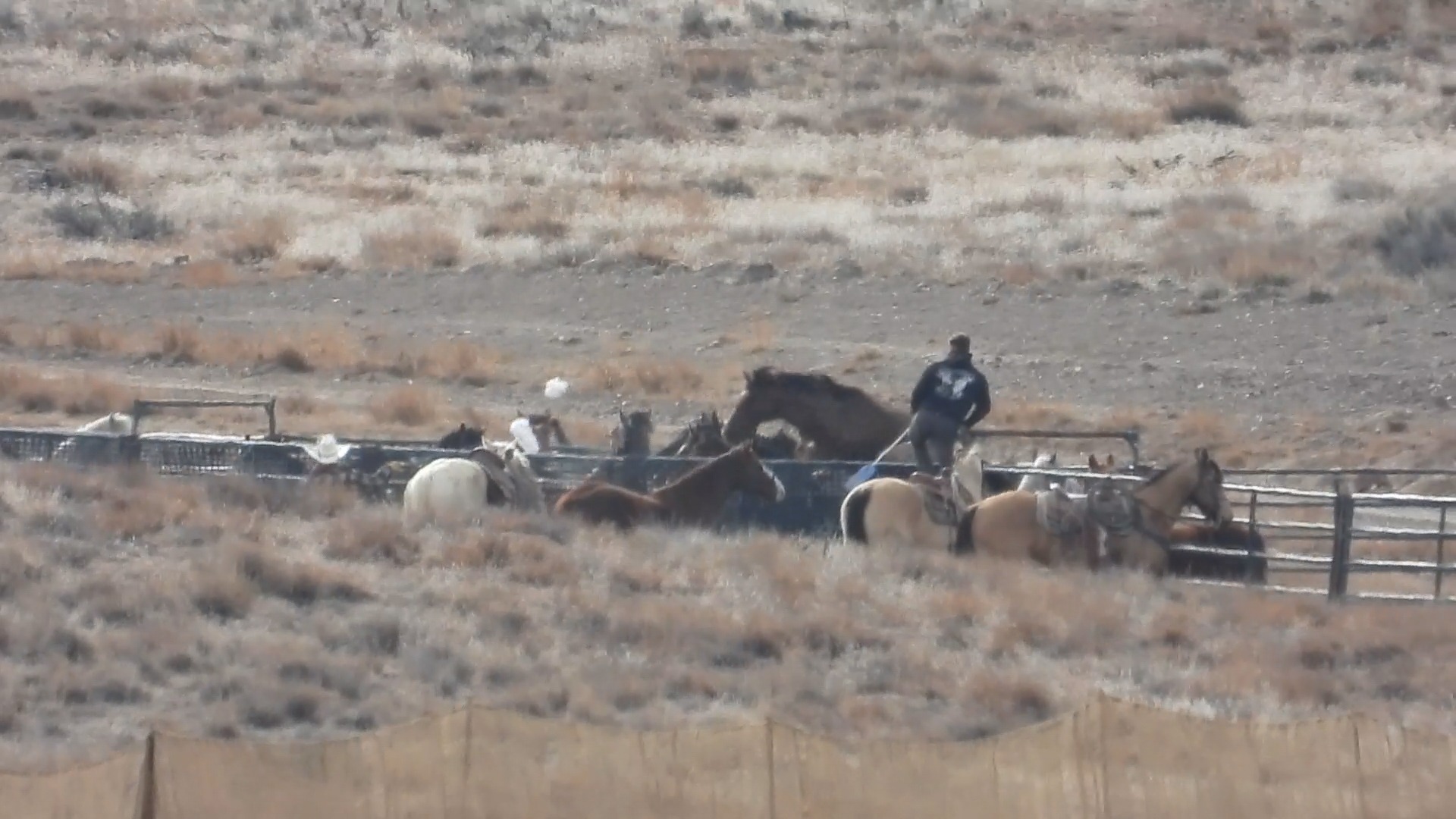
At one point some were even climbing on top of each other.
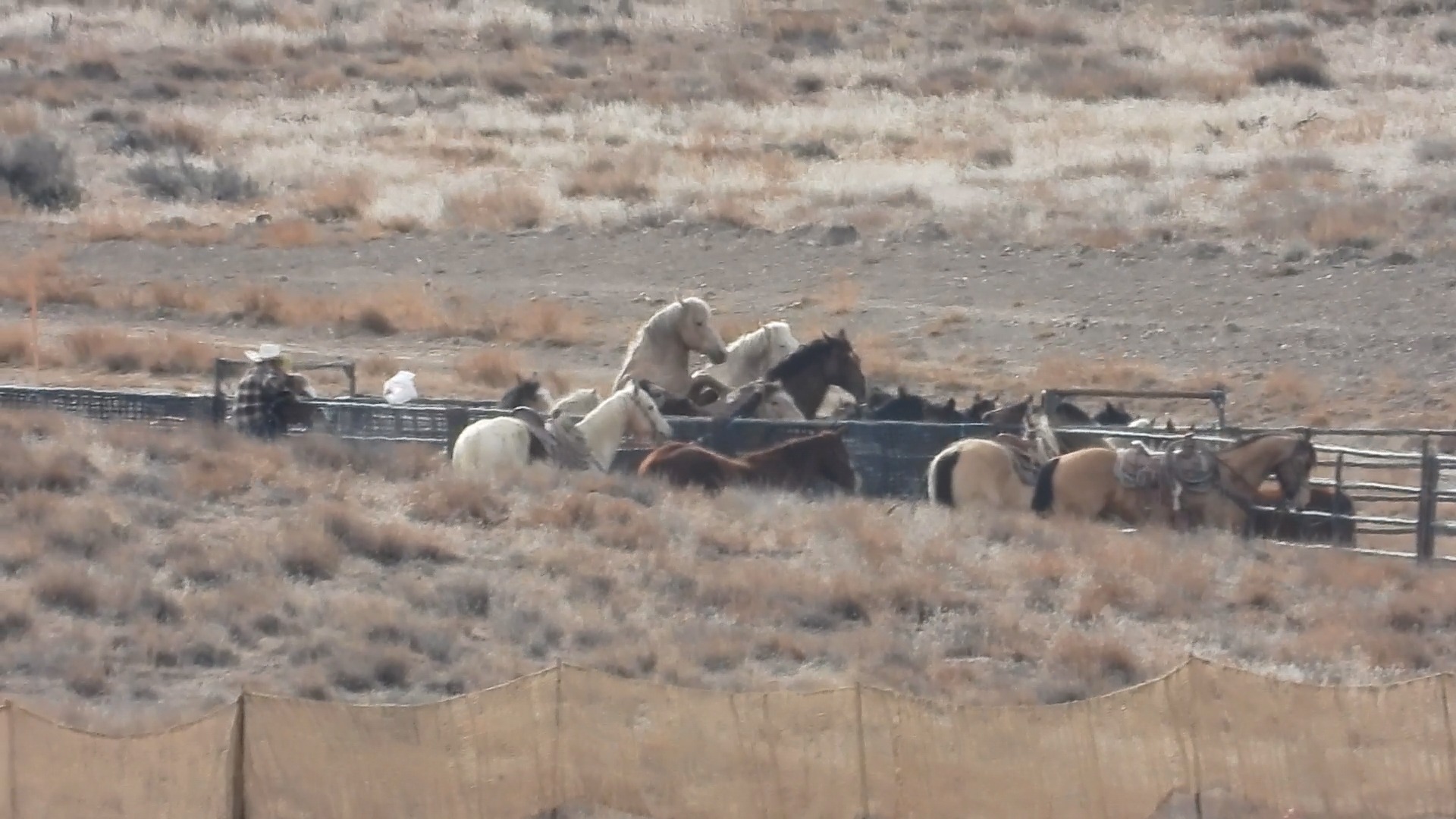
Two trailers left shortly before noon. Another at 12:30 PM.
At 1:30 PM, run 4 of about 15-20 came into view. They entered the wings and right as they were entering the end of the jute, they went through it and ran up the hill. The helicopter managed to immediately redirect them around and back into the trap.
It was called a day at 1:40 PM.
All 3 observers asked if there was temp holding or if they transferred the horses directly to the Winnemucca facility. We were told they didn't know but would find out. They attempted twice to ask but never got an answer.
So once again we didn't get eyes on the horses after removal.
January 28, 2026
The helicopters did not fly today.
January 27, 2026
We met the BLM at 5:30 AM, 17 miles outside of Winnemucca, and traveled 66 miles northeast to the same trap site we observed on Monday. After arriving around 7:30 AM, we hiked to our observation point approximately 500 feet from the trap. The helicopter was already landed at temporary holding, so we had some time to wait.
During this time, I asked BLM personnel if any horses had been injured or euthanized on Monday, since we are not allowed at temporary holding to verify conditions ourselves. I was told they euthanized a yearling due to a pre-existing degenerative issue with his fetlocks. The morning was quiet and partly cloudy in the low 30s. I was one of two observers present.
It remained quiet until about 10:30 AM, when we got word that the helicopter was about 4 miles out with a group of horses. We were observing from within a ravine, which meant we were unable to see the helicopter working horses toward the trap. We often couldn't even hear the helicopter until the horses began entering the wings of the trap.
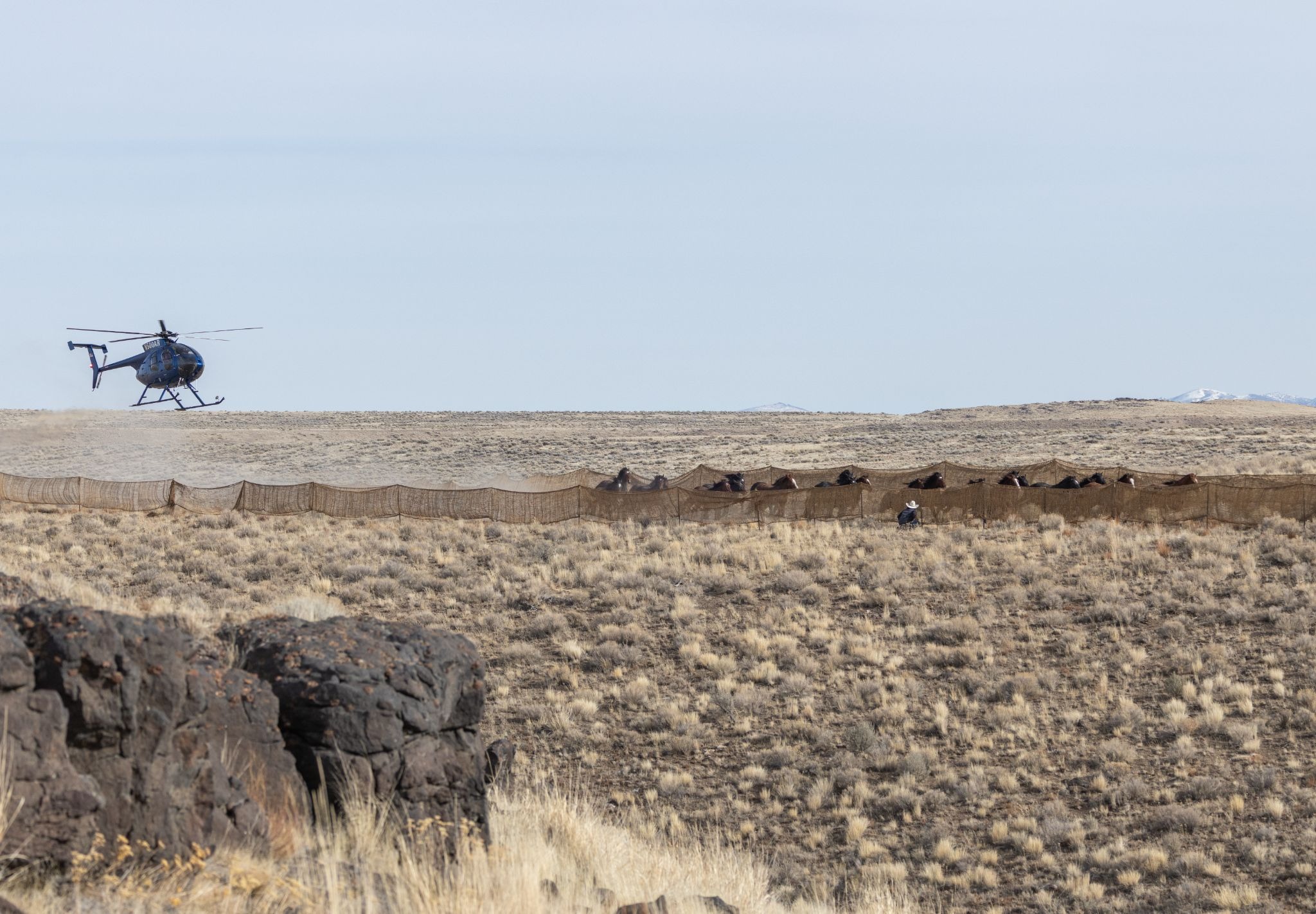
At 10:56 AM, the only run came into the trap. There were 20-25 horses. This was the only run of the day since BLM told us their goal had been around 80 horses from this spot and they already got 60 on Monday.
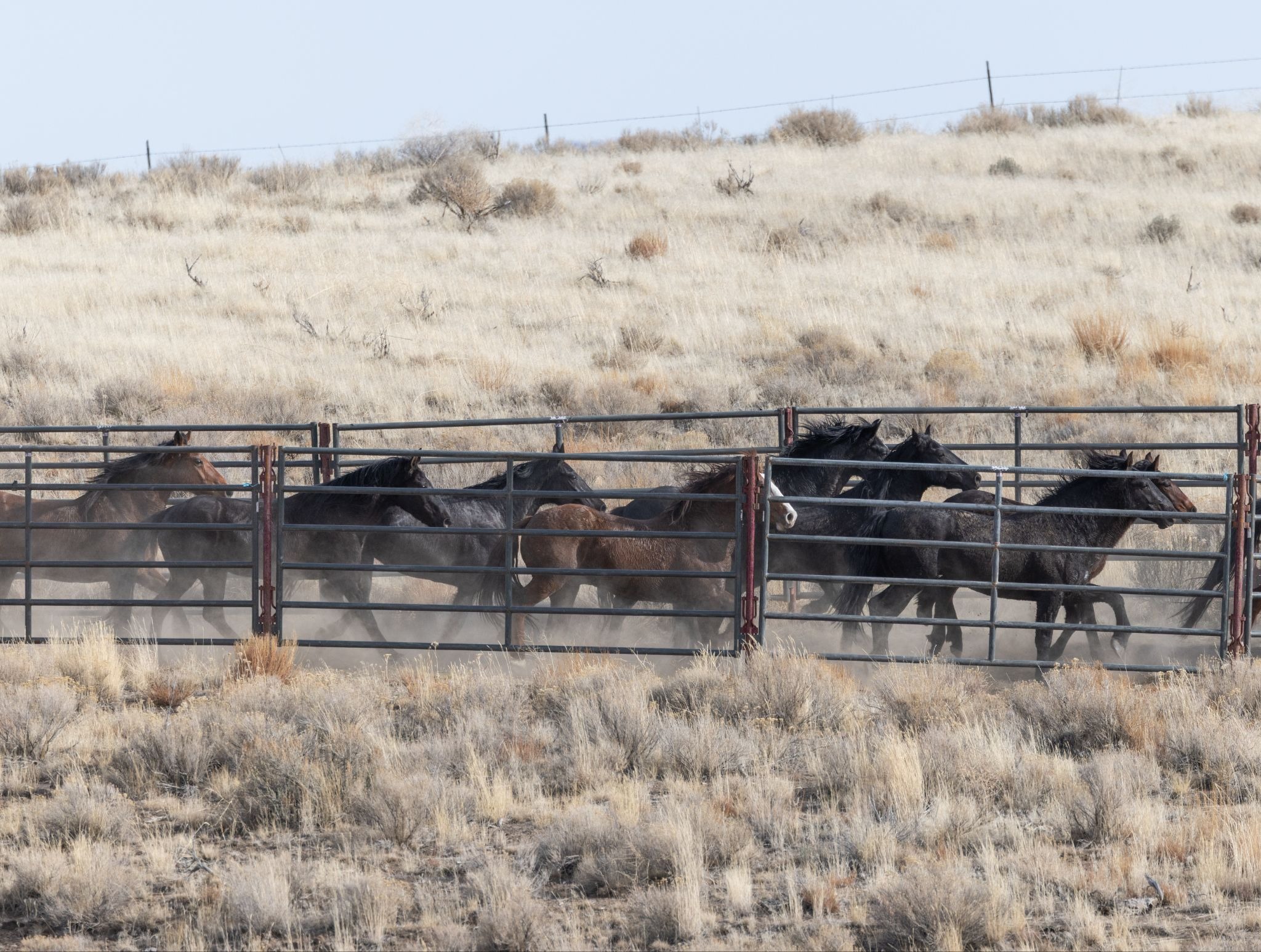
We watched the loading process for over 30 minutes. When they got the first trailer loaded, a horse was down toward the back. The wranglers stuck flags in the side of the trailer repeatedly, waving them and paddling the horse in front to get it to move. It took a few minutes to get the horse to stand up.
On the second trailer, the last horse wasn't wanting to load, so they paddled it to get it in. Once in the trailer, half of the trailer door swung inward so it wouldn't close. It appeared as though the horse's backside was blocking the door from swinging back out and closing. The wranglers took some time trying to get the horse to budge by hitting it with a paddle on the backside and head so they could pull the door back out to close it. They kept swinging the door back to see if it would clear, and it looked like it kept hitting the horse on the backside. Finally, one of the wranglers went on the side of the trailer, out of my view, and did something that caused the horse to jump up a little, releasing the door so they could close it.
After loading was complete, the trailers left for temporary holding, which was almost an hour from the trap site. We followed the trailers out but were unable to visit temporary holding because the private landowner will not permit us to access the location.
I was told they will be tearing down the trap and moving to a new location for Wednesday.
Janary 26, 2026
We met BLM personnel at 5:30 AM outside Winnemucca and traveled 66 miles northeast to the observation point, arriving at 7:32 AM.
After parking, we hiked down a ravine and up the opposite side to a rock shelf near the top. Our position was on a rocky slope within the ravine, approximately 500-600 feet from the trap site. Due to terrain limitations, we could not see over the ridgeline to observe horses approaching the trap. We had no visibility of the distance horses traveled, their direction of approach, or herd behavior during the helicopter drive. Visual observation began only once horses entered the trap itself.
FIRST RUN (Approximately 9:00 AM)
Number of Horses: 45-50
Condition Upon Entry: Horses' coats were visibly glistening with sweat upon trap entry, indicating potential exertion during the helicopter drive.
During penning, horses pushed forward in the confined space. One horse became trapped with its head underneath another horse's hindquarters and was kicked. The severity of injury could not be assessed from our vantage point.
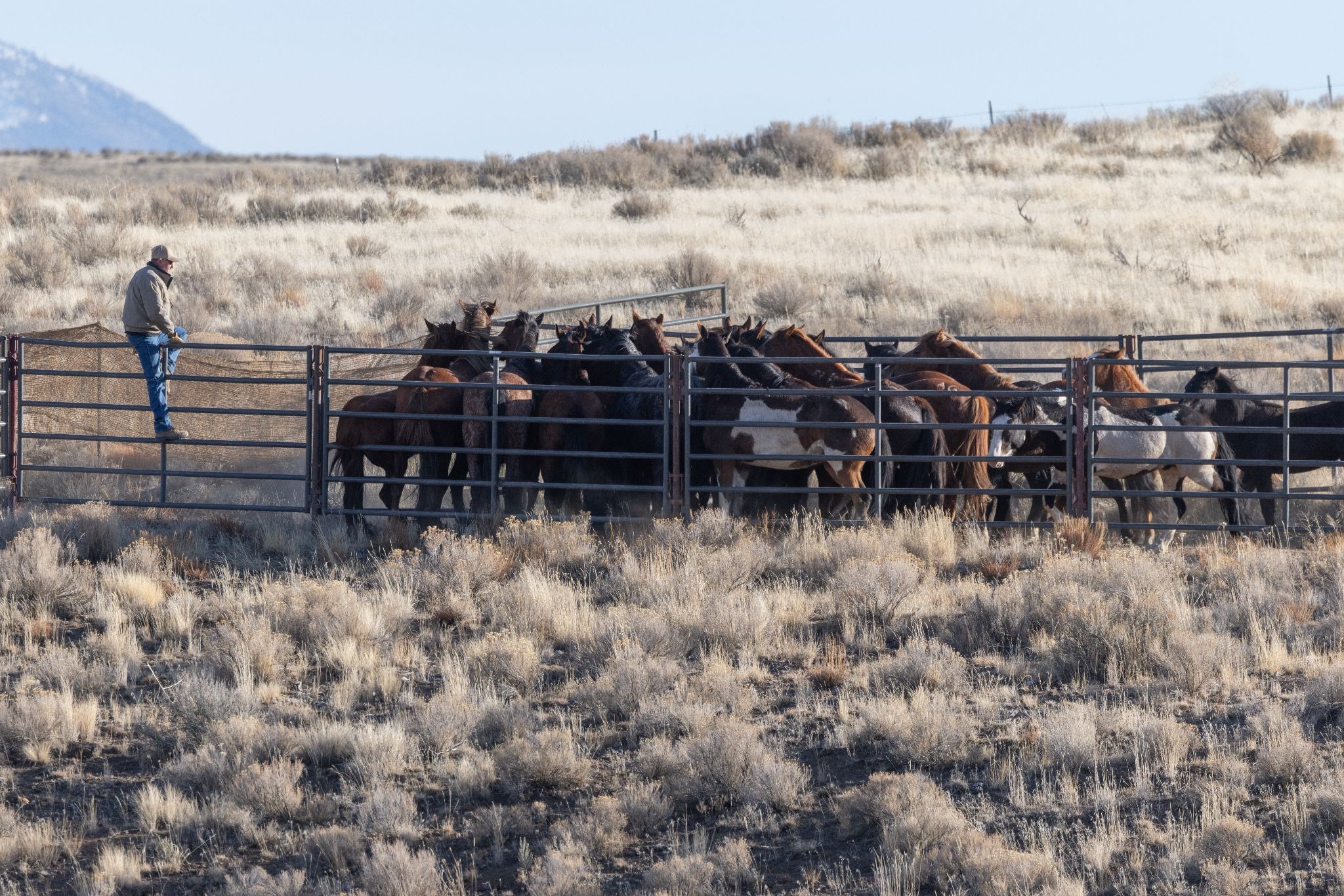
Sorting and loading operations continued for approximately one hour. Multiple horses displayed signs of panic during sorting. One horse repeatedly attempted to escape, running into metal panels. Trailers departed for temporary holding as they reached capacity, with some horses held in pens at the trap site until trailers returned.
SECOND RUN (Approximately 10:25 AM)
Number of Horses: Approximately 15
Condition Upon Entry: Coats were similarly shiny with sweat, indicating exertion during helicopter drive.
Operations Conclusion:
The roundup concluded for the day following the second run. We were unable to observe loading of the second group, as trailers had not yet returned from temporary holding when we departed.
BLM personnel stated temporary holding facilities are located at Squaw Ranch, which is private property. The property owners restrict access to BLM personnel only. I was therefore denied the opportunity to observe removed horses at temporary holding to assess body condition scores, document injuries, or verify animal welfare post-capture.
Observation Summary
- Limited transparency: Observation point prevented assessment of helicopter drive distance, direction, terrain, and herd behavior during pursuit
- Animal welfare concerns: Horses showed visible signs of exhaustion; at least one kicking incident during penning; panic behavior during sorting and loading
- Access restrictions: No access to temporary holding facilities for post-capture welfare assessment
Total Horses Observed Captured: Approximately 60-65